
In the aftermath of the Cold War, a wave of democratisation, coined by American political scientist Samuel Huntington as the ‘Third Wave’ swept across the world. The wave refers to the transition of several non-democratic setups to democratic ones, promising a future where democratic ideals would grow. However, the present century has witnessed geopolitical events and developments that have impacted the ideals of governance worldwide. The paper aims to investigate contemporary trends of democracy prevalent in the world. It uses prominent democracy indices and reports like the Varieties of Democracy (V Dem); Freedom in the World; Democracy Index; Bertelsmann Transformation Index and the Global State of Democracy report, to have better insights about the Third Wave of Democracy. It also highlights the major factors that are seemingly responsible for its existing status. The findings of the paper reveal that while democracy is seen as an ideal form of governance by many, two decades into the 21st Century, a large proportion of the world is struggling with the third wave in one form or the other. While several internal factors can trigger democratic decline, recurring coup attempts and the rise of far-right populism are accelerating the decline of the Third Wave of democratisation at the global level.
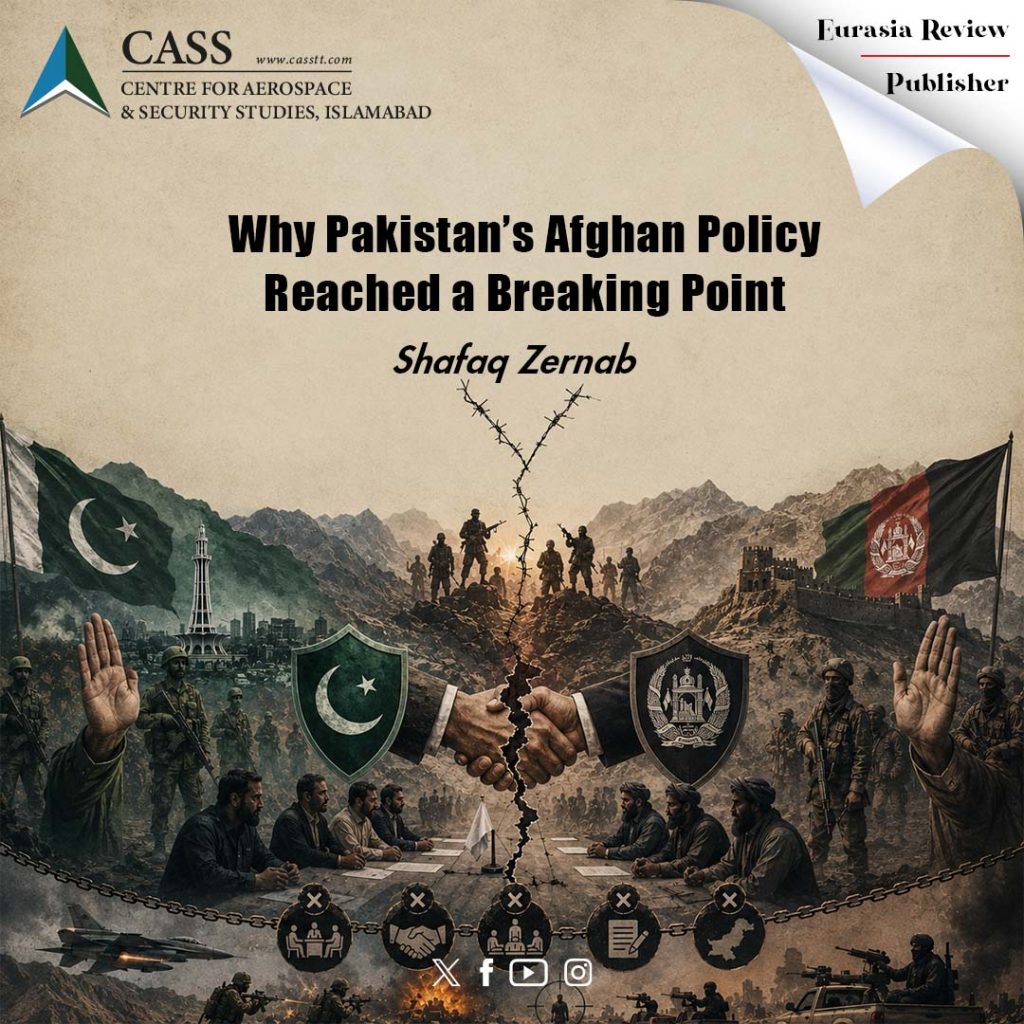
Why Pakistan’s Afghan Policy Reached a Breaking Point
The ongoing war between Pakistan and Afghanistan is the result of a gradually worsening security situation along the Durand Line rather than a sudden strategic shift. The core issue was not the absence of dialogue, but its inability to deliver binding results to the foremost security concern of for Pakistan: the use of Afghan territory by militant groups to attack Pakistan. When Pakistan in response switched to cross-border strikes in February 2026, the state had already gone through several years of attempted accommodation without securing any meaningful restraint from the Tehreek-e-Taliban Pakistan (TTP) by Kabul.


The West: The History of an Idea
The world is witnessing the collapse of the Western order, if not the emergence of an alternative one. The idea of ‘West’ as against the rest is still at the root of contemporary understanding of world politics. Georgios Varouxakis, a remarkable voice on Modernity and Nationalism, has provided the historical origins and modern connotations attached with the idea of ‘West’. In his book ‘The West: The History of an Idea’, Varouxakis has argued that the West is not an eternal entity, rather it is a modern socio-political construct that emerged in the political philosophy of the early 19th century and evolved with the passage of time. The book provides an in-depth historical analysis of the idea to determine the roots of its modern interpretation.
