The White House on April 6th issued a summary of the review of US’ withdrawal from Afghanistan. This 12-page document encapsulates the major decisions taken by the US administration when it was pulling out forces from Afghanistan in 2021.
The House Foreign Affairs Committee, headed by Republican Michael McCaul, is conducting hearings to look into the way in which the Biden Administration departed from Afghanistan. The Committee demanded to see a review of the decisions leading to the withdrawal prepared by the Pentagon and State Department which were sent privately to Congress. While the original documents remain classified, the summary of conclusions, prepared by the National Security Council with President Biden’s direct input has been made public by the US government. It explicitly states that due to the Trump administration’s lack of planning, President Biden was faced with ‘severely constrained’ options to end the war in Afghanistan.
The summary states that a series of President Trump’s decisions strengthened the Taliban. Initiation of talks with the Taliban without consulting allies; the non-inclusive process of negotiations by keeping the Afghan government out of the process; pressurising the Afghan government to release Taliban commanders as a part of the Doha Agreement without securing the release of a US hostage; and finally the drawdown of US troops impacted the US position on the ground. Subsequently, when Biden took charge in January 2021 with the looming date of withdrawal of May 2021, Afghan Taliban were in control of nearly half of the country with 2500 US forces personnel on the ground. According to the document, there was no ‘transition coordination’ between the outgoing and incoming governments as the former had no concrete plan for final withdrawal.
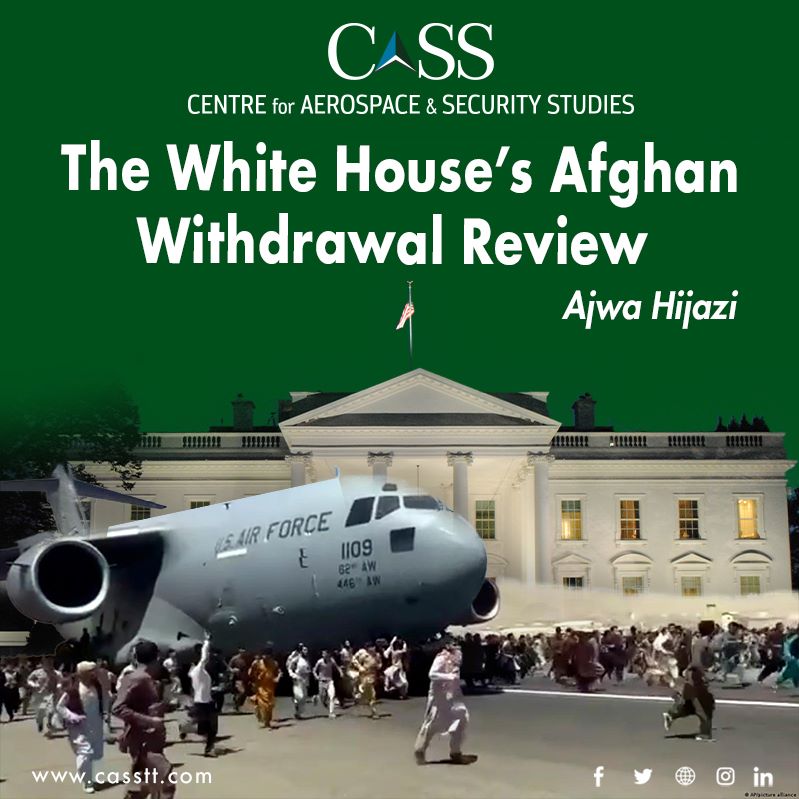
Furthermore, the review also highlights faulty optimistic intelligence assessments about the fighting prowess of the Afghan forces and the likelihood of the capital, Kabul not falling quickly to the Taliban. According to the review, the unrealistic ground assessments led to the process of evacuation starting quite late. The US carried out its largest non-combatant evacuation operation (NEO) and evacuated 124,333 American and Afghans in 17 days, but it occurred when things were on the brink of getting out of control. The visuals of people running along the C-17 transport plane of the US Air Force as it was taking off from the Kabul airport aptly depicted the high degree of chaos with which the US wrapped up one of its longest wars. While the White House document does not accept responsibility for delayed evacuations, it has been prioritising early evacuations of Americans amid any overseas security crisis since then.
The release of this summary of the internal assessments has triggered a political feud between Republicans and Democrats as the former is accusing the White House of distracting the public from the deadly withdrawal from Afghanistan which killed 170 Afghans, along with 13 American troops in a suicide bombing at Kabul airport, followed by a miscalculated drone strike which killed 10 civilians, including 7 children. Moreover, Donald Trump also responded to these summary conclusions by stating that the Biden Administration was blaming him for its ‘grossly incompetent surrender’ in Afghanistan.
Apart from triggering a political blame game between the previous and current administrations, this review mainly reflects the same lack of foresight and clarity in the US policy towards Afghanistan, at the time of withdrawal, which was a hallmark of its 20 years of war. Underestimation of the Afghan Taliban’s power and overestimation of Ghani’s government efficiency led to US authorities not being able to foresee the win of the Afghan Taliban from city to city before reaching Kabul on 15 August 2021. The US position, in the face of the Taliban’s rapid action, was weakened to an extent where, according to General Mark Milley (Chairman Joint Chiefs of Staff), no amount of time, funds and presence of forces could alter the result of the war which ended with the Taliban being stronger than ever.
In the future, there may be additional declassification of confidential documents regarding the US policy response during the Afghanistan withdrawal. However, the onus of responsibility for the chaotic events of the summer of 2021 ultimately falls on both the Trump and Biden administrations. The process of leaving Afghanistan could have been smooth and less lethal if a well-coordinated policy (in light of changing ground realities) had been formulated through deliberations between the US, the Afghan government, and the Taliban. Ultimately, the US withdrawal from Afghanistan was just as hasty as its entry some 20 years ago.
Ajwa Hijazi is a Research Assistant at the Centre for Aerospace & Security Studies (CASS), Islamabad, Pakistan. She can be reached at [email protected].