From the past few months, scientists in the United States are trying to solve a mystery that they named ‘Havana Syndrome’. The seriousness of the matter can be gauged from the fact that the US security agency, the Federal Bureau of Investigation (FBI) has made Havana Syndrome a top priority for the protection of American diplomats and their families. It has been reported that around 200 US diplomats and their families in various countries are said to be affected by this syndrome that have symptoms such as migraine, dizziness, memory loss and nausea. Since, it was first reported in Havana, Cuba a few years ago and more recently, microwave weapons were suspected to be a cause of this. Due to this syndrome, a number of official visits have been postponed in the past few months.
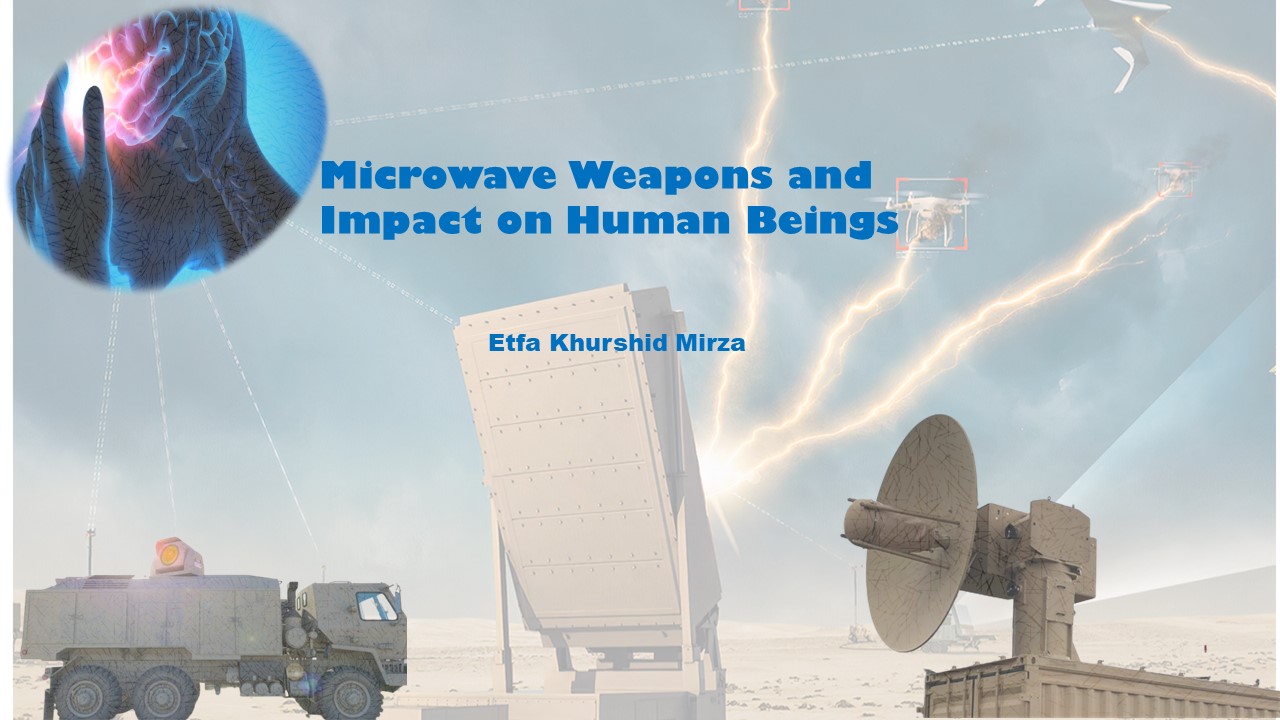
Advancement in warfare technology and its effects on human health is becoming a great concern nowadays. Directed Energy Weapons are one of them. These type of weapons use electromagnetic spectrum i.e. direct energy to ‘disable, damage, disrupt or destroy’ the adversary’s target. Such type of weapons include High Energy Lasers (HEL) and High Powered Microwave (HPM) and are collectively called ‘Directed Energy Weapons’ (DEWs). Despite there being controversy surrounding the suspected involvement of microwave weapons causing the so-called ‘Havana Syndrome’, concerns about the long-term implications of these weapons on human health is genuine.
Many consider the impact of microwave weapons as effective since it transforms energy from a power source into electromagnetic radiation that is emitted and focused on a target. While microwaves to used to heat or cook food are relatively harmless due to minor radiation, these waves due to their diminutive size allows for better concentration and according to scientists, the human head can become a perfect antenna to pick up these waves. This was first experienced in the 1960s by a biologist named Allen H. Frey. He could hear microwave beam pulses emitting from a facility, while working on a project at Cornell University. This was later named as the ‘Frey Effect’ that created sounds loud enough to produce painful discomfort and could render targets immobile.
The amount of energy delivered to the target over time determines the destructive capability of microwave weapons. This focused energy has a range of effects, from non-lethal to lethal and could be used to develop weapon effects at higher levels. When targeted towards humans, microwave weapons enable atoms to vibrate, which produces heat and as a result body temperature rises from 98.6° F to 107° F at a distance of 200 yards. This temperature rise can be lethal at a closer range, which can potentially stun a person due to peripheral nerve stimulation. The brain’s capacity to comprehend incoming information is overwhelmed by the simultaneous activation of numerous nerves, resulting in unconsciousness. Besides temperature, distance from the source is also important when we talk about biochemical effects of microwave exposure. Experiments with extremely low frequency electromagnetic radiation have shown that the radiation can cause the brain to release hormones, or a molecule called histamine. Histamine causes flu-like symptoms in human beings. Other effects can impact neurological, cardiovascular, immunological, endocrine, and reproductive systems. Electromagnetic field (EMF) exposure can also cause neuropsychiatric symptoms in human beings. Common symptoms include fatigue, headache, depression, memory loss, nausea, skin burning and inflammation, loss of weight and appetite, dizziness, vertigo, lack of concentration etc. Among the multiple types of low intensity EMF exposures, three most common exposures that human population is vulnerable to are heavy use of mobile phones, living near cellphone base stations, and exposure to wireless smart meters. Usage of mobile phones and smart devices cannot be avoided due to increased reliance on these, however, their long-term effects need to be considered, especially if the same are given to young children.
Coming back to the DEWs, despite potential effects on human health, countries are developing these weapons. Every country has its own DE Weapons Programme (DEWPs). The United States and its Department of Defense continues to invest in such programmes and its Air Force, Army and Navy also have separate DEWPs. Similarly, Russia, China, and India are also in the race spending huge amounts in developing their respective programmes. As the technology matures, the use of lasers and microwaves in warfare may become a reality one day. Whether these weapons are a prime cause of the so-called ‘Havana Syndrome’ or not is a mystery, but keeping in view the implications of such weapons, it is a serious concern that major countries need to address.
Etfa Khurshid Mirza is a Researcher at Centre for Aerospace & Security Studies (CASS), Islamabad, Pakistan. Her area of interest is warfare and emerging technologies. She can be reached at [email protected]
Image Source: Etfa Khurshid Mirza