In international politics, there have been periods of mistrust, suspicion and coercion between different states. In the present day, states’ behaviour is an example of the same pattern. During the previous century, Japan and Australia experienced a relationship of mistrust, parallel to the same pattern of uncertainty and ambiguity. Presently the two nations find themselves, not only in a new and refined sphere of sharing the same values, but also increasing the scope for military cooperation. A hypothesis, which can be proved wrong is that Australia and Japan are entering into new realms of strategic cooperation attempting a balancing policy initiative vis-à-vis China.
In 2007, Japan and Australia inked an agreement known as the Joint Declaration on Security Cooperation. The agreement ensured collaboration between the two states in multiple domains, specifically law enforcement, military exercises and peace operations. The treaty, while vigorous, ceases just short of a Security Treaty that would place the two in a security alliance. To express their cordial relationship, Japan and Australia used the phrase ‘special strategic partnership’. In 2017, both countries jointly opposed the provocative actions of North Korea and highlighted their shared values. In a meeting with his counterpart, Australian Foreign Affairs Minister Julie Bishop declared the two states as “the most like-minded nations in the Indo-Pacific”. In 2018, Japanese Prime Minister Shinzo Abe and Australia’s premier Malcolm Turnbull discussed bilateral engagement for better defence cooperation and to reaffirm their commitment to foster bilateral ties while reemphasizing their shared values. Another step to enhance bilateral cooperation was an initiative for improved military agreement named Reciprocal Access Agreement for conducting collaborative military exercises. During the same year, a new strategy was outlined in ‘Japan’s National Defence Program Guidelines’ with an emphasis to seek a new dimension in strengthening existing security ties with the US, but with an enhanced vision of cooperation with other states as well. The guidelines have extensively highlighted Chinese military aims, the North Korea factor and Russian military developments, to justify a sheer need to increase investment in the Japanese military.
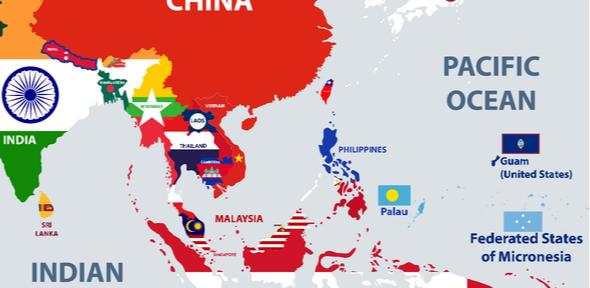
Japan’s rebalancing approach is the outcome of the changing regional situation combined with North Korea’s disruptive behaviour and China’s visible military advances. Another factor that played a significant role in changing Tokyo’s diversification approach in terms of military cooperation was the statements of American president Donald Trump in which he routinely attacked the policies of most of America’s allies. Realizing the need for strategic engagement and military cooperation at an expansive level, Japan has a developed agenda to collaborate with potential security partners namely Australia, India, the United Kingdom, New Zealand and South Korea. Additionally, the relationship with Russia and China is another option for Japan to create a stable regional security environment. While Japan is critically analysing regional developments and China’s active role in Asia Pacific has forced the country to adopt immediate counterbalancing measures, Australia’s policies are more independent. Australian trade with China has a big ratio as compared to Japan and there are no formidable threats of any territorial dispute between China and Australia. Nevertheless, Australia has always considered the US as the supreme strategic ally in the region, which was mentioned in the Australian Defence White Paper, published in 2016. In the current regional paradox, Australia has stressed the need for establishing strategic partnerships with India, Japan, Indonesia and others. Australia and Japan, both view China as a nation of great strategic importance but its geostrategic power sets it apart from being recognized as a sole power broker. In most of their defence documents, Australian and Japanese officials tend to use a more cautious language which signifies trends of low acceptability of China as an ally.
In the past, the ‘alliance-oriented’ approach of America created a different type of security infrastructure in Asia Pacific. The current US policy of disengagement from its traditional alliance infrastructure has provided extended options for other powers to fill the void. As it was witnessed, the moves by China and Russia to take over global responsibilities was the outcome of US negligence to act as a key global player, the changes within the alliance infrastructure of the US is an example of a similar development. The regional conundrum of Asia Pacific is entering a new phase where alliance formation is becoming more prone to existential threats for states, and this might make Asia Pacific a far tenser region.