With its substantial size and geography, over 1.3 billion population, a booming IT industry, a large size economy and emerging markets, India perceives itself as a regional power with a capacity of becoming an international player.
Both Indian leadership and masses hold a self-image, ostensibly egged on by ‘Bollywood’ influence, that among other aspects, its armed forces are fully capable of supporting its aspirations of a global leadership role. Time and again, however, the Indian armed forces have failed to come anywhere close to such massive expectations, and have often displayed embarrassing operational performance.
Under erroneous self-image of an ‘incredible India’, post-Pulwama incident, the Indian government kicked up war hysteria in collusion with its virulent media. Aiming to project Narendra Modi as a tough leader capable of leading the nation at the centre stage of world politics, it conducted its misadventure of all times by venturing into a futile air raid koshered as a surgical strike. In reality, this alleged surgical strike was nothing more than a hurried ingress across the LOC, hastily dropping its payload to swiftly escape from the approaching PAF interceptors. In the reprisal that they had coming their way the very next day, the IAF not only failed to defend its airspace but also lost two aircrafts with one pilot captured by Pakistan and losing one helicopter from fratricide.
Days later, the endeavour to open another chapter failed miserably when an Indian Submarine was not only caught by the vigilant Pakistan Navy, but was also forced to abandon its mission and retreat away.
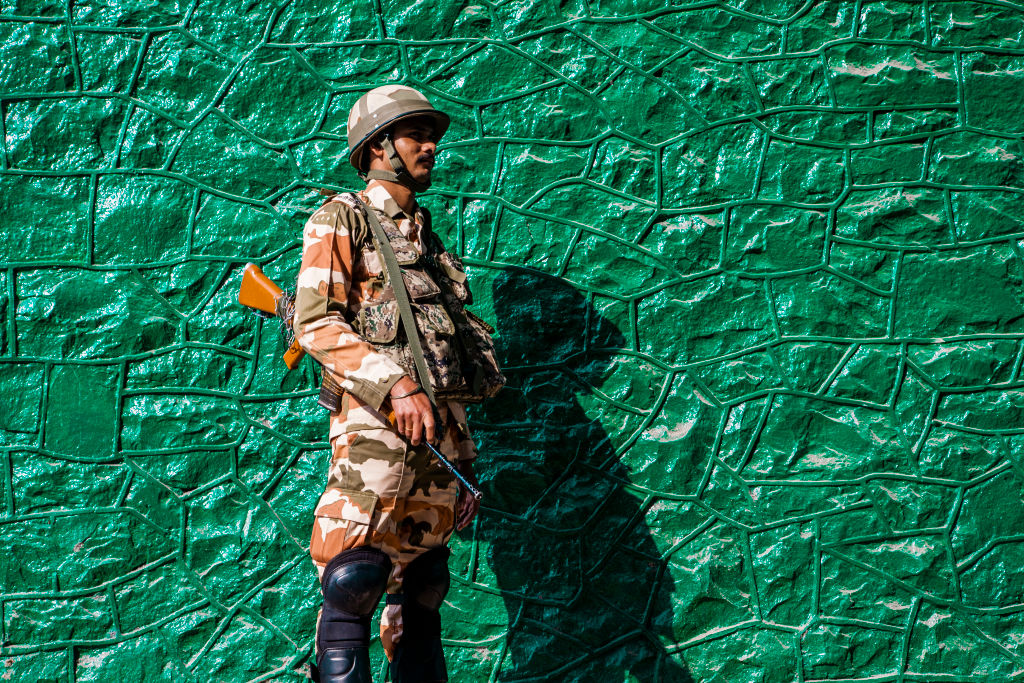
The Indian army keeps shooting at the civilian population across the LOC in Azad Kashmir, but ends up failing to protect its bunkers and men from retaliatory Pak Army fire. The warfare at land, sea and air attempted by its three services thus ended up with repeated failures.
It would not be wrong to say that no armed forces in the world are known to have displayed such an abysmal performance, especially against a numerically much smaller adversary. For India, this is not the first time as its armed forces have a track record of poor performance since 1962. The Indian forces are not likely to improve their performance at any time in the near future for a number of reasons – most of which are seemingly beyond their control.
Firstly, in India, materialism takes precedence over everything else. Most of bright and capable young people coming into job market opt for professions relating to IT, management, medicines or engineering etc. Those who can financially afford and take the risk venture into personal businesses or industry. None of the new entrants from political or business elite or those from the upper middle class tends to join the armed forces. Thus young people failing to get admission in good institutions due to low academic performance and/or with no financial support are left with little choice but to join the uniformed military cadres. This betrays of a generally low morale and below average capability of such low performers from the lowest strata of the class-conscious Indian society, who primarily join armed forces for sustenance and job security.
Secondly, in comparison with other government institutions as well as private organizations, Indian armed forces do not enjoy public respect or support. The Indian armed forces work under close control of Indian bureaucracy, with negligible say in strategic level decision making. Even the routine promotion decisions by service headquarters are often challenged in the court. The decisions on acquisition of defence equipment are made by the politicians and bureaucrats, often based on kickbacks or economic concessions etc, with little regard for the military’s determination of its operational needs.
Third, the ethical values remain at the lowest ebb. There have been numerous scandals exposing Indian soldiers reporting fake encounters. Sometimes complete units have been caught in such organized fraudulent activities. Such incidents not only show low morality and brazen professional standards, but also result in many people being promoted to higher ranks on the basis of fake acts of valour. Such undue benefits for some bring in their fold far reaching demoralizing effects on the comrades.
Fourth, every year, more than a 100 Indian armed forces personnel commit suicide due to financial reasons, dissatisfaction with the job, or sexual or religious harassment etc. The number of sexual harassment cases reported each year in the Indian armed forces is considerably high in global statistics. There have also been unfortunate cases of senior officers molesting spouses of their subordinates. Under such circumstances, the individuals try to avoid getting deployed to operational areas; once deployed they cannot perform to the best of their abilities.
Fifth, the minorities in India are viewed with suspicion, with the same holding true in the armed forces. While people from minorities groups go out of their way to substantiate their patriotism, they are unable to perform optimally due to fear or inhibition. Their concerns are also evident during social get-togethers or media interactions. The reason is simple; individuals cannot perform to their best under an environment of distress and intimidation.
Finally, the Indian armed forces personnel are convinced that the politicians, bureaucrats and business community perceive them as expendable cannon fodder. Such perceptions have often been authenticated through interviews of the parents or other family members of those who died during active operations. To surmise, individuals with low standards of performance, low moral values or morale;or those lacking self-esteem, fearful of consequences, etc, cannot perform well in peace time, what to talk of the situation when they are under stress of war; precisely explaining failure of Indian armed forces during combat situations.
The author is a retired Air Marshal of the PAF who served as Pakistan’s Air Adviser at New Delhi from 2002 to 2006, presently working as a director at Centre for Aerospace and Security Studies. The article is originally published in The Nation.
Image source: Internet