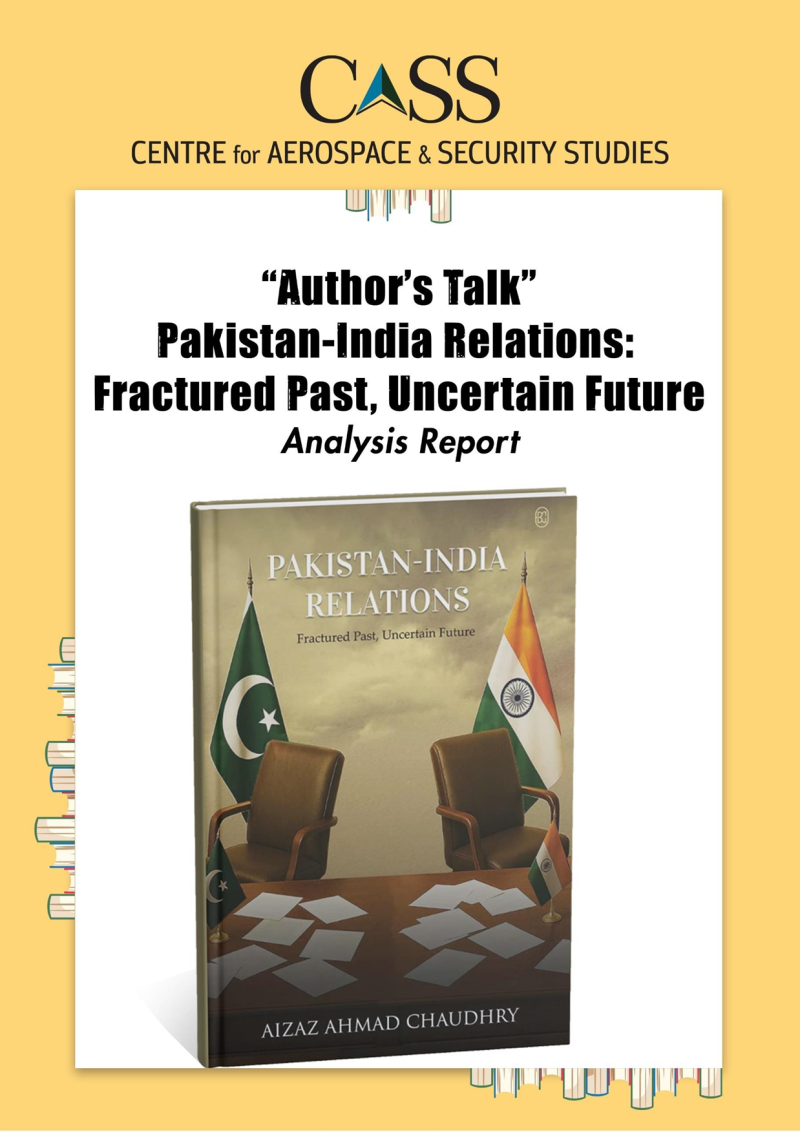
The complex and often turbulent relationship between Pakistan and India remains one of South Asia’s most enduring and consequential realities. Rooted in a shared history yet marked by decades of mistrust, conflict, and unrealised peace initiatives, this relationship continues to shape the region’s strategic environment. In the authors talk series, Pakistan–India Relations: Fractured Past, Uncertain Future Ambassador Aizaz Ahmed, former Foreign Secretary of Pakistan, discussed his latest book and aimed to generate a nuanced understanding of the historical underpinnings, recurring challenges, and possible pathways toward stability in bilateral relations.
The discussion brought forth critical questions: Why has the past remained fractured despite multiple peace efforts? Why does the future of Pakistan–India relations continue to appear uncertain? The conversation contextualised these questions within regional and global shifts, particularly India’s evolving political ideology, its regional ambitions, and Pakistan’s strategic posture. By analysing the recurring patterns of mistrust, territorial disputes, and ideological divides, the event provided a timely reflection on the lessons from history and the imperatives for a more balanced and secure future for South Asia.