Air defence systems (ADS) constitute a central function in modern conflicts. However, the increasing pace of their export has extended the role of the systems beyond the battle space. Their scope is no longer limited to war rooms, it is also written in the politics of their export. Hence, modern ADS have become important instruments, shaping contemporary politics.
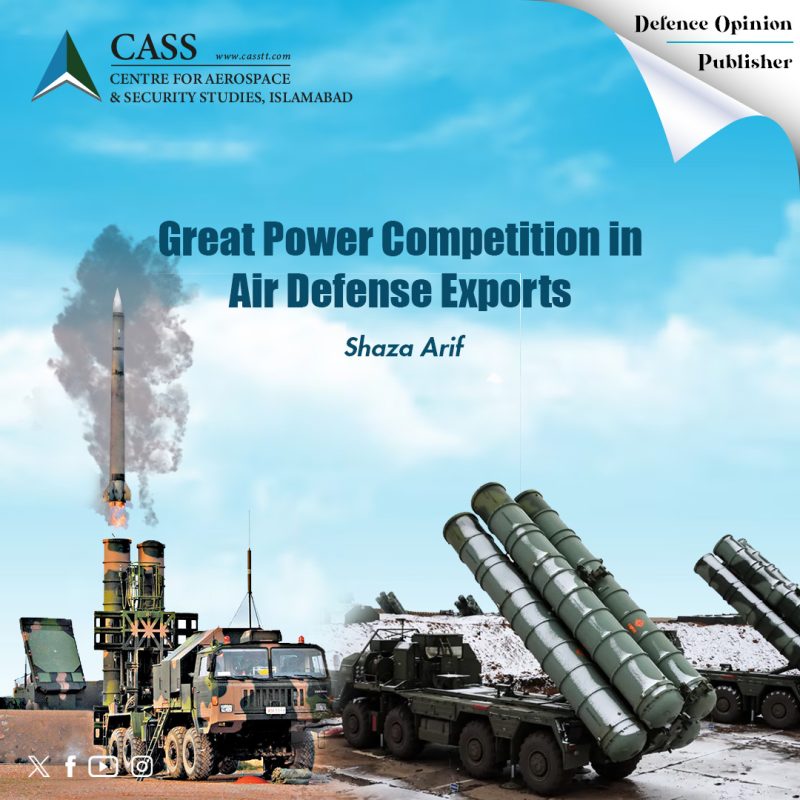
The intersection of ADS and politics is more evident in high-profile systems. There are several cases where the ADS export has had a profound impact. The Russian S-400 has been one of the geopolitically controversial defence sales in the recent past. Turkey’s purchase of the S-400 ADS sparked major concerns within NATO, prompting a crisis within the alliance. The episode marked the first instance where a NATO country acquired Russian weaponry, brushing aside the interests of the security alliance. Consequently, Washington removed Ankara from the F-35 fighter jet programme, though interoperability concerns of S-400 with NATO weaponry were cited as the reason for the punitive action.
As a display of political intent, Russia gave a subtle message to NATO by employing its weaponry in one of the key NATO states. In parallel, Turkey demonstrated an independent foreign policy approach following repeated refusals of the Patriot systems, the US competitor of Russian ADS.
Similarly, in South Asian context, India’s purchase of S-400 raised notable concerns in the US. This surfaced at a time when Washington was courting New Delhi as a strategic ally in the Indo-Pacific. The procurement triggered the imposition of the Countering America’s Adversaries through Sanctions Act (CAATSA), although a waiver was later given to India. The introduction of the latest ADS technology in South Asia has adversely impacted regional security dynamics.In future, the S-500, with an extended range of 600 km, is also likely to unleash new developments in different regions.
Similar to Russia’s use of ADS as an instrument for signalling political intent, the US has also leveraged its ADS notably the Terminal High Altitude Area Defense (THAAD), and Patriot MIM-104 system to reinforce its clout in key regions such as the Middle East. The selective export of Iron Dome and Arrow systems has shaped Israel’s defence policies and continues to reaffirm US commitment to Israel in the region. The THAAD system continues to be positioned in key states such as the UAE and Saudi Arabia, whereas the Patriot system has been exported to Saudi Arabia, Bahrain, Qatar, Kuwait, and the UAE.
While the US weaponry is building up a robust defensive coalition against Iran, it is also triggering an arms race vis-à-vis more missile developments in the Gulf. Furthermore, as witnessed in the recent Israeli attack on Qatar, the increasing reliance on American ADS might have raised second thoughts in the Gulf regarding future procurements.
Moreover, this pattern is also seen in the Asia-pacific region as THAAD systems are stationed in Korea. It shows US solidarity with the state and also serves to deter its adversaries in the region. The system has raised notable concerns in Beijing, particularly due to the performance of THAAD’s AN/TPY-2 radar which directly impacts China’s air defence systems. Such developments trigger countermeasures and escalation in the region.
In parallel, Beijing is developing its own defence network including HQ-9 and HQ-22 as low-cost alternatives to Russian and American systems. In regions where political alignment constrains western options, the Chinese ADS can appeal to potential buyers.
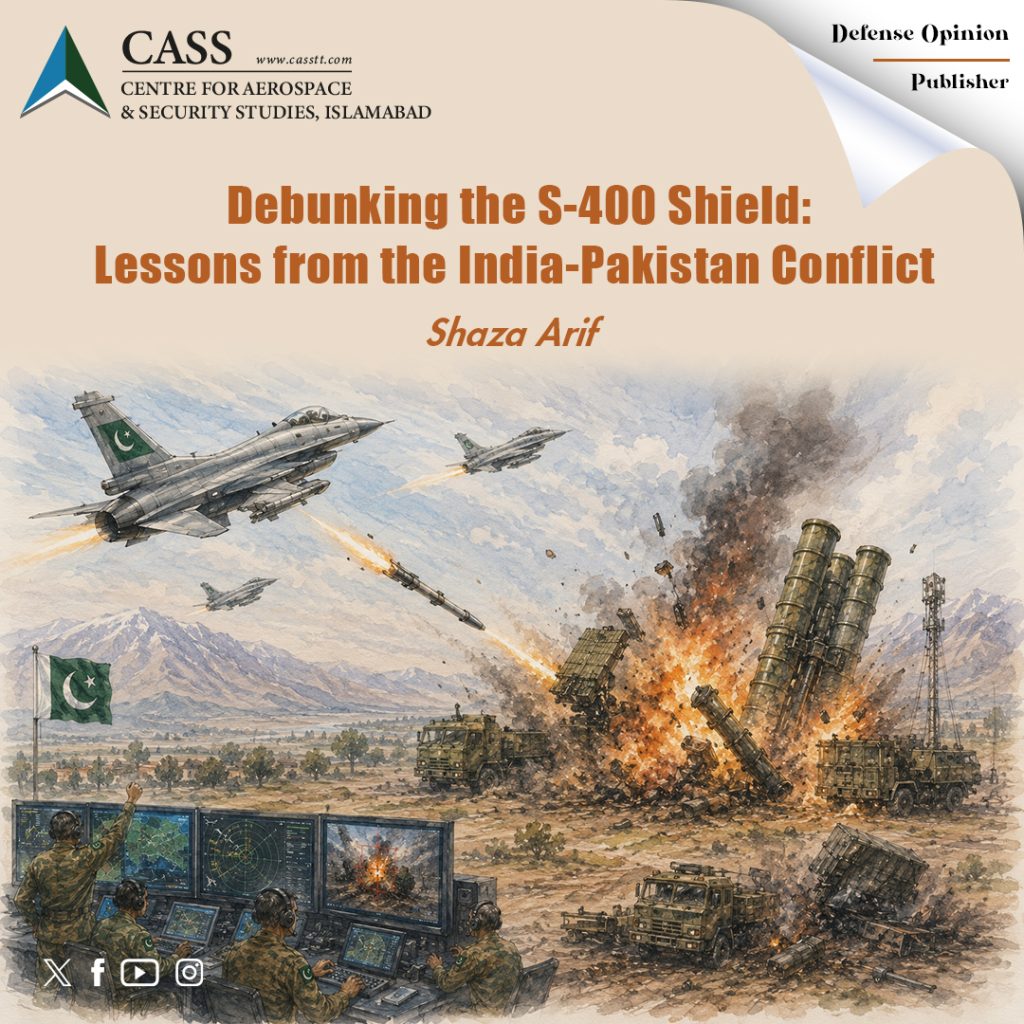
Apart from politics, the procurement of advanced systems comes with numerous technical challenges, including interoperability issues. Optimal performance requires seamless integration of sensors, radars, interceptor missiles and command and control links. For instance, in India’s case, where suppliers are diverse, i.e. the USA, France, Russia and Israel, the systems have encountered interoperability and integration challenges as witnessed in the May 2025 standoff. In its most recent crisis with Pakistan, the Russian S-400 failed to provide the required coverage to Indian jets.
Thus, air defence export imposes technical and political dependency on the procuring state. The procuring side often gets tied into the suppliers’ defence ecosystem. The purchase invites multiple risks especially when it is tied to sanctions, as seen in Ankara case. Furthermore, the procurement requires integration, training, technical assistance and software updates, locking buyers into long-term dependencies, and making pseudo alliances. Hence, given the ongoing trends, it is likely that many states may move towards indigenous solutions to overcome existing challenges.
Overall, the air defence export is impacting all critical and conflict-prone regions stretching from West Asia, South Asia to the Asia Pacific. These regions are becoming theatres for the exports of Russian, American and Chinese ADS with notable implications for the future
In the 21st century, technology and politics are remarkably intertwined with each other. Air defence systems are no longer confined to radars, interceptors and missiles. As the competition intensifies and becomes more complex in this realm, so does the international security landscape. Shaza Arif is a Senior Research Associate at the Centre for Aerospace & Security Studies (CASS), Islamabad. The Article was first published in Defence Opinion. She can be reached at [email protected]