Ukraine’s meticulously planned Operation Spider Weband Israel’s Operation Rising Lion have demonstrated the efficacy of next-generation technologies globally. The existing discourse on the operations has credited the game-changing capabilities of drones, precision-guided munitions (PGMs) and other technologies in determining the fate of modern conflicts. However, it has turned a blind eye to a critical component of the theatre: military logistics.
Operation Spider Web involved a multi-layered logistics campaign which included setting up front companies inside Russia, renting warehouses, and transporting the First Person View (FPV) drones compartmentalised inside cargo trucks, according to SBU Chief Lieutenant General Vasyl Malyuk. Similarly, in Israel’s Operation Rising Lion, logistics played a critical role in the Israeli Air Force’s successful campaign of Suppression of Enemy Air Defences (SEAD) and Destruction of Enemy Air Defences (DEAD). Reports indicated that Israel made incremental modifications to its F-35I to reach Iran without refuelling and compromising its stealth features. Moreover, the fleet of F-15s could be seen carrying two or three external drop tanks to operate at extended range. Such modifications enabled Israeli F-15 and F-35s to successfully manage a round-trip from Iran without the need to refuel.
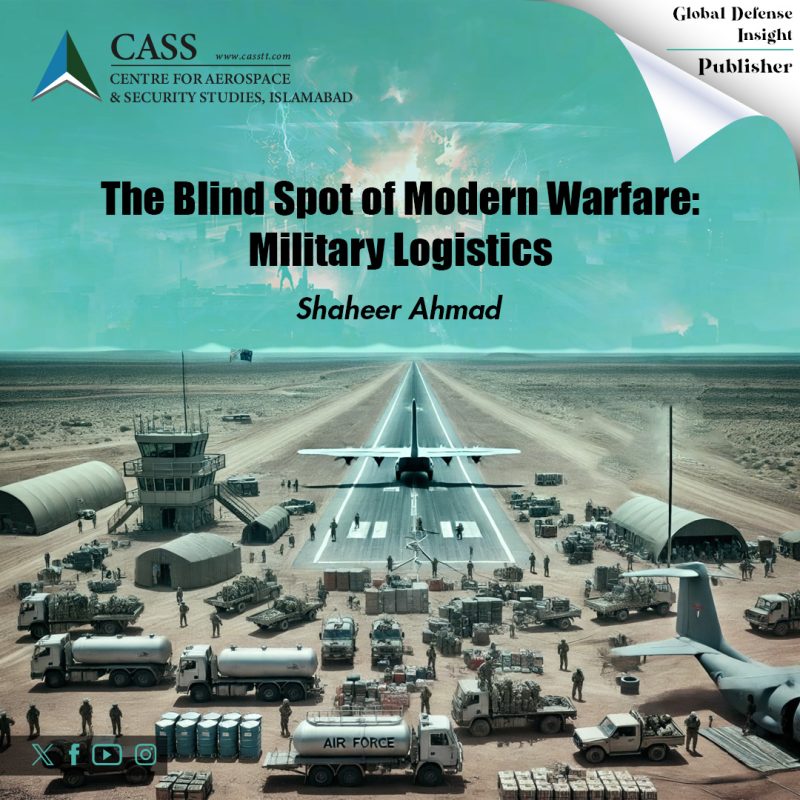
Notwithstanding the significant role of technologies such as unmanned aerial vehicles (UAVs) in modern warfare, military logistics will play an even greater role in raising and sustaining combat-ready military forces. Unfortunately, this critical component is often absent from the discourse when discussing the impending future conflicts. The transcripts of military leaders’ speeches, commentaries by seasoned experts and podcasts on future warfare have little to no mention of the role of logistics in modern combat.
Surprisingly, the Potemkin wargaming by notable think tanks also pays no significant heed to these questions. Instead, their experts are more inclined toward the imaginary movement of ships and fighting jets for the sake of optics. Likewise, actual wargames have struggled to address this shortcoming. The unclassified report on the 2022 UNIFIED PACIFIC war game highlighted the absence of practical clarity on the joint logistics operations in the Pacific theatre.
High North and Indo-Pacific are the future theatres of great power war. Unique geography, extended supply lines, long distances and climate anomalies pose formidable challenges to the Western militaries. The forces operating in these theatres need to seize control of terrain, ports and related infrastructure to support integrated joint operations. It involves sustaining the operations ranging from air to missile defence, aviation, communications and control. On top of that, maintaining theatre-level support, fuel supplies and transporting troops into the battlefield are daunting tasks for theatre sustainment commands and field support units.
Tyranny of distance is another impediment that needs to be accounted for. Contrary to a smooth highway drive of 70 miles from NATO’s sustainment center to Ukraine, the Taiwan Strait is 1700 miles away from the US base in Guam. Similarly, frigid Celsius and barren Arctic tundra require special equipment tailored for harsh climatic conditions. Forward Supply Companies (FSC) face significant challenges in supplying on the battlefield to line companies. Moreover, stationed troops have to consider adaptability and non-conventional methods, because the standard operating procedures (SOPs) often do not perform well in frigid temperatures.
Concomitantly, decades of Western military involvement in the Global War on Terror (GWOT) have made their forces hesitant to conventional combat. The legacy of two-decade asymmetric warfare has downplayed the need for comprehensive supply-chain management, pre-established storage sites, and interoperability with the regional allies and partners. Moreover, the differences in scale, strategic intent and modalities of asymmetric warfare have affected the militaries’ readiness to face the adversaries on large-scale conventional battlegrounds involving ground, sea and air lines of communication.
Therefore, it is crucial for modern militaries to rethink their Time Phased Force Deployment Data (TPFDD) mechanisms. This will enable an effective deployment of the right forces in the right area with equipment and sustainment resources. Moreover, as new systems are introduced, military planners need to account for the enactment of capacity building for maintenance and sustenance of modernised equipment. Furthermore, pre-existing ports, airstrips, railroads and related infrastructure should be upgraded to assist field support units’ operations in contested zones.
Amateurs talk strategy, professionals talk logistics. General Omer Bradley’s maxim discerns the notion of victory and defeat in contemporary conflicts. The rapid changes in the contemporary geopolitical landscape, coupled with momentous breakthroughs in technologies, have altered the warfighting patterns globally. Instead of oversimplifying modern warfare, scholars and practitioners must ask the right questions about how to overcome the supply chain and logistics bottlenecks in the contested theatres. If they don’t, the logistics may become a central reason, resulting in future military defeats.
Shaheer Ahmad is a Research Assistant at the Centre for Aerospace & Security Studies, Islamabad. He can be reached at [email protected]