Bollywood has a strange effect of taking you away from reality and that is exactly what sells in a country of 1.4 billion people. Unfortunately, in the electioneering season it can also cloud the judgement of beleaguered political leaders. The 14th February Pulwama incident handling reflects the implausible chain of events, which has ensnared the Indian government in a dangerous vicious cycle.
What follows for the next three weeks is a classic example of falling prey to deceitful narratives, built on flawed intelligence information. It is here that the role of the Indian media in fanning war hysteria comes in. If the spin doctors could embroil the US and the West in Iraq and countless other conflicts, why couldn’t this be done in India? With over 400 TV channels and 200 million whatsApp users, the world’s largest, this was easy. To justify military action, a new terminology of ‘non-military pre-emptive strikes’ was coined.
While the air incursion had all the elements of copying the US- Israeli airpower model used against benign victims, the Indians ignored Pakistan’s resolve and military potential. The Indian Air force tasked to boost Mr Modis vote-bank must have put in their Tom Cruises in their best machines, to undertake the task of eliminating battle-hardened terrorists. How the incursion was executed and where the bombs were ultimately thrown is another story. Of consequence is how the Pakistan Air Force clinically struck back. Taking on six targets, shooting down two aircraft and capturing one pilot is a rare feat and an embarrassment which will haunt the IAF for decades.
Meanwhile, sensing a nuclear showdown, the world powers which had edged India pulled back to their own agendas; the Trump-Kim summit, Brexit, Venezuela and so on. The release of the Indian pilot and calls for talks by the Pakistani Prime minister have fallen on deaf ears. With the BJP chief Amit Shah asking people to vote for Modi, a mere eight hours after the Jaba fiasco, the realisation of a plot has finally dawned on the Indian opposition. The media-bollywood hypnotized public is slowly waking up to reality. As Modi bemoans for the Rafale machines, it is clear that a semblance of sanity has crept in. It is now an Indian battle of the sane voices versus the insane.
The sane club is appalled at the combined failure of the strong Indian political and military systems, and calls for reappraisal and restraint. It is bewildered at the brazen use of military might for political gains. The ordinary Indian realizes that without a resolution of the Kashmir issue the region will remain embroiled in a brutal circle of violence. It yearns for the Gandhi, Nehru and later, Mother Teresa era, when India had some character. The non-aligned movement, support for the Palestinians were at least a semblance of Indian balance and a just and righteous image.
The sanity propagators are also deeply concerned about the rise of Hindutva doctrine, the slow painful death of Indian secularism and the perils of playing around with Pakistan’s deterrence regime. They recognise gains of an engagement strategy with Pakistan and understand that the only way forward is to coexist in harmony. It is only then that the potential of seemingly endless possibilities of prospering together, sharing benefits of mutual trade and energy with Afghanistan and Central Asia can be realised.
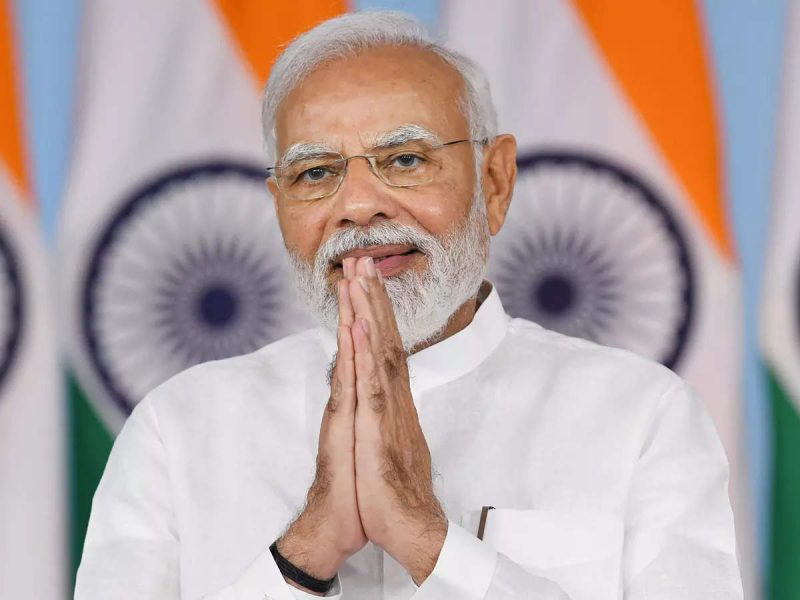
The insane club led by Modi, media and the military is sluggishly coming out of stunned disbelief. They very well know that the world supports India for its money, and not for its principles. It’s already put the contingency plan in motion. The events have not gone as portrayed in the movies. It’s time for the media wizards to sound the victory mantra on every event. Spin a web of lies and deceit. Consequently, the fantasy of ‘Abhinandan’ the hero, who shot an F-16; in reality, the poor guy didn’t know what hit him. The assumption that Pakistan is down on its knees, India must get new intel capabilities and weapons ASAP. Get Rafale’s or whatever from the experienced Israelis to exact revenge, accelerate the covert operations and hybrid war in Pakistan, isolate it internationally, and if all else fails, plan another Pulwama to settle scores.
With dreams of Indian grandeur, it is the insane group currently in majority which worries Pakistan. After Pulwama, the BJP under a struggling Modi is deaf, dumb and blind. A very thin line separates the regimes policies from active coercive terrorism. Practically, with no international condemnation for its actions, it feels emboldened to go a step further.
This would again be a serious miscalculation. But then again it’s a forty- day Indian style election season. Under the circumstances, who so ever wins the contest has implications not only for the region alone but also for the world? In the meantime, it would be prudent to keep Mr Modi away from the movies.
Air Marshal Javaid Ahmed (Retd) is Director of policy and doctrine at the Centre for Aerospace and Security Studies. He can be reached at [email protected]